Wednesday, June 24, 2015

8 ways Mpowerment Projects can support PrEP as an option.

Mpowerment Projects (MP) are strategically poised to take advantage of new biomedical interventions that exist, and new ones certain to arrive soon. We believe combining social, behavioral, and biomedical approaches will have the greatest impact on HIV prevention. 

Although the MP was originally conceived as a primary prevention strategy focused on reducing unprotected sex, because it is multilevel and inherently flexible, its components are well suited for delivering health-promoting content across any number of domains, including the use of PrEP and possibly encouraging positive guys to seek healthcare, stay in care over time, and adhere to HIV medications—though we are still testing MP’s efficacy at improving engagement in care.

The MP’s adaptability and methods make it a promising approach to use to disseminate information and to mobilize young men to learn more about PrEP and decide if PrEP is right for them. Since MP is a community level intervention, and is already established in many communities, it has the ability to reach thousands of young men about biomedical advances. 

RELATED:  What is the Mpowerment Project? Download Module 1: Mpowerment Overview.


Mpowerment YVR | Vancouver BC

Here are a few ideas to insure that PrEP can be successfully integrated into MP:

1) M-groups, one of the components of the Mpowerment Project intervention, are one-time skills building sessions for small groups of young gay and bisexual men.  The M-groups have been updated to include information and discussion points about PrEP.  M-groups are designed for a mixed group of young men, those living with HIV (whether they are out about their status or not) and HIV negative young men, as well as HIV unknown status men. A training manual for the M-groups including newly revised PrEP content and new content specifically for HIV+ men related to engagement in care (called the M-group Facilitator’s Guide) can be accessed when you register for free at www.mpowerment.org

2) Collaborate. If your organization doesn’t provide PrEP, have someone from your local clinic that provides PrEP come to a Core Group meeting to meet with CG members and volunteers to educate them about how young MSM can access PrEP locally. If there isn’t a local resource, try to generate interest by working with an LGBT-friendly clinic or clinical provider. Some MPs have found that their local clinics are set up to enroll participants.

3) Create attractive outreach materials that can be distributed at venues where young gay and bisexual men gather, and posted on social media that:
  • Inform your participants about PrEP as an option. Keep them in the vein of traditional MP materials, create graphically appealing, cheeky, fun materials that are attractive as well as informative for young adult bisexual and gay men. 
M Society | Mpowerment Houston TX
4) Create opportunities for referral/linkage to PrEP by having a list of local providers who are open and willing to prescribe PrEP available at the Mpowerment Project project space. Work with your agency to create ‘PrEP navigators’ who can assist young men with doctors, needed labs and to explore financial assistance options.

5)  Many projects have already hosted ‘PrEP forums’, bringing in local providers, health professionals and PrEP advocates. Encourage participants who are willing to share their PrEP journey. Perhaps your Community Advisory Board (CAB) can help with securing guest speakers. 

6) Explore ways young men can support their friends who decide to use PrEP


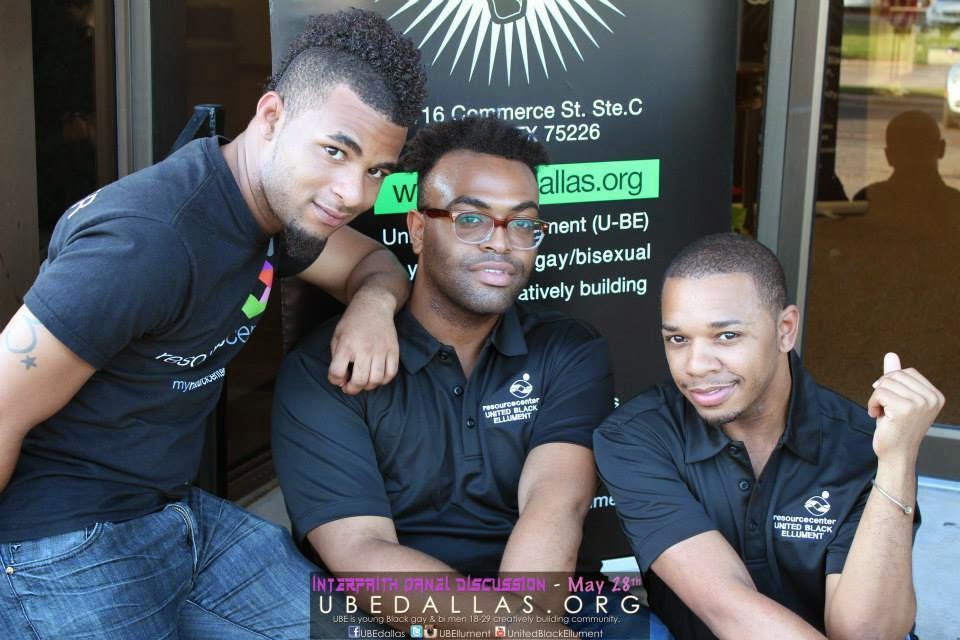
United Black Ellument (U-BE), Mpowerment Dallas TX
7) Collaborate. Have your Core Group members volunteer with a local clinic that offers PrEP. Some MPs have found that their local clinics are set up to enroll participants. 

8) Ask your funder, agency or health department for increased funding for PrEP implementation so that these ideas can be integrated into MP social events as well as marketing and awareness campaigns. Adding a new HIV prevention tool requires additional coordinator training, programming effort and planning. Be sure your Project gets credit.  


As always, follow the MP guiding principle of being gay affirming and sex positive. Develop activities and/or materials that might address PrEP-stigma in your community if appropriate.  MP also recognizes the need to nurture the exploration and celebration of gay men’s sexuality, not just focused on condom use but including the variety of sexual activities that are safe.

We would like to hear your feedback about these suggestions and any examples of how you are putting these and other ideas into action.

The Q Austin, Mpowerment Texas
How The Q Austin, Mpowerment Austin TX works with with the Austin PrEP Access Project (A-PAP). via Marcus Cruz Sanchez, Mpowerment Coordinator.

The A-PAP began in December 2014 as a group of volunteers who recognized the critical need to make PrEP more available in the Austin area. The Q Austin has been hosting discussion groups, distributing articles and information on PrEP on their social media and at the Q Space. The Q Austin participants were presenting with knowledge of PrEP yet were asking ‘how does one get on PrEP?’ 

The Q Austin had prepared local physician referrals for PrEP, however some of these doctors were not accepting new patients and the referral list quickly became useless. 

A-PAP is an all volunteer force. They work with local HIV researchers and doctors to secure a little space at a local clinic. They have organized doctors and phlebotomists interested in volunteering their services. APAP makes appointments with clients and their navigators. When they meet with the navigator the client receives a battery of tests. When the tests check out, the prescription goes to the navigator for approval. They look at options to pay for a PrEP prescription. 

The Q Austin coordinators, Core Group and volunteers are on board with increasing PrEP access. Q Austin coordinators  sought approval from the agencies Prevention Director to include A-PAP and PrEP cards at their testing clinic. 

The Q Austin let’s participants know that A-PAP is in Austin and active. Q Austin lets A-PAP is a good place to gain PrEP access. In the next few months they are working on planning additional PrEP/education panels to be hosted in the Q Space.  At upcoming community and pride events the Q Austin asks to table right beside A-PAP. The Q is talking to the Austin young MSM community on a daily basis and reflecting on PrEP as a new HIV prevention tool.


The Q Austin, Mpowerment TX


A-PAP Austin Texas

Austin PrEP Access Project: website

The Q Austin: websiteLike The Q Austin on FacebookFollow the Q Austin twitter
The Q Austin is a Project of AIDS Services of Austin


Additional PrEP resources and articles:
How to talk to your doctor about PrEP via the Advocate
PrEP Toolkit via AIDS United 
Project Inform offers free to order PrEP cards
My PrEP experience
Patient Assistance: Paying for PrEP (Truvada) via Gilead
Welcome to the California PrEP provider directory: please PrEP me

PrEP as a prevention option:  our previous blog on PrEP.
Preparing for PrEP: What PrEP could mean for Black gay and bi men: via The Black AIDS Institute
"The most celebrated, mistrusted little pill in the world." Two old friends debate the daily drug that could revolutionize HIV prevention. 

Additional resources for doctors:
Engaging healthcare providers to implement HIV pre-exposure prophylaxis.
[Curr Opin HIV AIDS. 2012] - PubMed - For Doctors / Providers link
Project Inform offers booklets in English and Spanish: Order form for PrEP booklets
The Centers of Disease Control -  CDC | Resources for Doctors / Providers
My PrEP Experience blog:  Animated Video "What is PrEP?"

Read more about the Mpowerment Project in the manual.   The manual is a free download when you register at Mpowerment.org. Click here for a quick look at the essential Core Elements of the Mpowerment Project. 


Austin PrEP Access Project - Austin TX
+++

Questions? We are here for you. 


Tuesday, June 16, 2015

Join us. Attend the Mpowerment Project training.

Want to make an enormous difference in the lives of young adult Gay and Bisexual men? 

The Mpowerment Project (MP) might be right for your agency. 

The MP remains a popular intervention for CBOs who want to make a difference in the lives of young Gay and Bisexual men in their communities. 

  • You will gain an in depth understanding of the Projects Core Elements and Guiding Principles
  • You will meet a others interested in evidence-based, community-building HIV prevention for and by young adult Gay and Bisexual men (18-29).
  • Learn how the Mpowerment Project achieves goals of High Impact Prevention (HIP).
National and State Health Department Funders, Center for Disease Control (CDC), Supervisors, Coordinators, Core Group and volunteers: 


Everybody is welcome.

RELATED:  What is the Mpowerment Project? Download Module 1: Mpowerment Overview.

Mpowerment Training, San Francisco CA

"Thank you, this was really helpful. I'm excited to get back to work and implement everything I have learned."


The training is a low-cost, multi-day, introductory training that gives participants an in-depth understanding of the MP and the chance to interact with the original researchers and former Project Coordinators. Check our training schedule here.  For more information on MP trainings contact Ben Zovod at 415.476.6428 or email at Benjamin.Zovod@ucsf.edu.

Mpowerment Training, Columbus OH 

"I had a great time! You are amazing!"

A variety of online resources are also available, including social networking pages on Facebook and Twitter.  The Mpowerment manual is free.

We continue to offer telephone- based and web- based technical assistance...we encourage you to talk to us whenever possible.

RELATED:  We are here for you. Capacity Building Assistance (CBA) services available.

"Great training. I got so much out of this and I thought I knew so much. Really does go to show that learning is ongoing. It was great to see other agencies as they addressed some of the same struggles we have. Also, it feels amazing to know I have a new support system in all of the other Mpowerment projects in which I will be contacting. Thank you!"

Mpowerment Training, Newark NJ 

RELATED:  Helping organizations implement the Mpowerment Project 

"Great experience - Thank you for being so thoughtful, funny, and engaging. Keep up the good work!" 


Mpowerment Training, Denver CO
Coming soon to a city near you?

The UCSF Capacity Building Assistance PartnershipMaking high-impact HIV prevention possible.
UCSF Alliance Health Project


The Mpowerment Project is a research project of the Center for AIDS Prevention Studies, University California San Francisco. 

We are a member of the CBA Provider Network


Tuesday, May 26, 2015

5 important questions for the Mpowerment Project to ask itself

Why is it important to conduct monitoring and evaluation? 

The Mpowerment Project (MP) was carefully designed and tested in several different communities to see if it was successful in reducing sexual risk behavior among young gay/bisexual men. 

The intervention’s success has been established through carefully controlled scientific studies. However, every community and community-based organization (CBO) is somewhat different, and each community and organization that decides to adopt the Project will need to adapt the intervention to its own unique circumstances.


It is better to have small, measurable goals and objectives than sweeping, unrealistic ones. 

Attend the Mpowerment Training. Contact Ben Zovod at 415.476.6428 or ben.zovod@ucsf.edu

Evaluation can help answer some basic and important questions 

Five important questions the Implementing Agency and the Project should be asking itself include:

1. Are we implementing the Project with all the Core Elements and following the Key Characteristics of the MP

2. If we adapted the MP, are we conducting it with fidelity to the Guiding Principles of the original model? 

3. Was something left out or changed from the MP that may make the intervention more or less effective than originally demonstrated? 

4. What MP Core Elements are being delivered and to whom? How well are the MP Core Elements being implemented? 

5. Are we obtaining the necessary information we need to satisfy our funder? 


RELATED: 7 issues that will facilitate or impede MP implementation

RELATED: 8 ways to provide agency leadership for the Mpowerment Project

RELATED: 11 themes to address in implementing Mpowerment for YBMSM


U-BE | Mpowerment Dallas TX
READ ME. Module 12 Monitoring and Evaluation and all MP evaluation documents in word.doc format are free downloads.


MP monitoring and evaluation resources can be copied from the manual or downloaded from the mpowerment.org website

Follow the adventures of these Mpowerment Projects


Wednesday, May 6, 2015

11 themes to address in implementing Mpowerment for YBMSM

The following themes about important issues to address in reaching Young Black Men who have Sex with Men (YBMSM) emerged from our research. We spent time understanding what the themes each mean, and then how they should be incorporated into the Mpowerment Project's guiding principles and core elements

Every core element was analyzed to determine how to incorporate each issue into it. These adaptations are addressed in the rest of the manual, Adaptation of the Mpowerment Project to Young Black MSM


United Black Ellument | Mpowerment Dallas TX
Internalized Racism / Internalized Oppression

YBMSM may have internalized negative societal messages related to their sexual or racial identities. This internalized oppression can affect young Black Gay and Bisexual Men in a variety of ways, including low self-worth, self-esteem, and self-love. It may also affect their desire to get tested or to avoid contracting HIV. 

Additionally, internalized oppression may also affect how YBMSM treat each other in sexual relationships, which is relevant to preventing HIV transmission, and prevention for positives. The project should deal with internalized oppression by integrating pride, both in Black heritage and in having same sex desire, into all core elements, as well as exercises that create conscious awareness of internalized oppression.

RELATED: Exercises addressing homophobia


ME + U Mpowerment New Orleans LA
Whole-man Approach

The project needs to focus on the “total” young man and not just on young men’s sexuality. 
This is particularly important since Black men are often stereotyped as being overly sexualized. Thus a holistic approach means not solely focusing on YBMSM’s behavior (sexual, or otherwise), recognizing that the participants are part of a larger Black community, and that many are faced with a wide-range of life issues including discrimination; socio-economic challenges; a biased criminal justice system; institutional and/or overt acts of racism; a sense of fatalism, hopelessness, and loss of control over their lives; and a “mainstream” gay community that has not been accepting of or welcoming to them. Additionally, a holistic approach includes supporting YBMSM to take on adult responsibilities and think about the future; a focus on wellness, such as exercise, diet, prayer; and supporting a connection to religion and spirituality. Yet the Board of Cultural Experts (BOCE) were also adamant that HIV prevention should not get lost in conducting these activities, and that HIV prevention should be woven into all activities.

Diverse Sexual Identities

YBMSM have a wide variety of sexual identities (gay, bisexual, “down low”, same gender loving (SGL), heterosexual, “just me”). Many men may be reluctant to join an overtly “gay” project and attend activities marketed “for gay men.” Yet in Dallas we have found that many men do want to attend a program that is described as “for gay men.” This should be explored in any new community implementing the Mpowerment Project.


The Evolution Project | Mpowerment Atlanta GA

Creating Young Black Gay/SGL Community Amidst Great Diversity

The project needs to help YBMSM envision and create for themselves a healthy, supportive community that recognizes and accepts the tremendous diversity among YBMSM. 
There are many diverse social networks that young men are involved in, which includes having their own clothing styles, activities, music, communication patterns, and slang. The project needs to facilitate a process wherein YBMSM consciously build a broader community in their own vision that encompasses diverse social networks, as well as men who are isolated. Yet class divisions in particular are likely to be challenging, and the BOCEs expressed concern about building a YBMSM community in which many life experiences of lower-income and middle-class YBMSM are very different.

Bisexuality

Many YBMSM have concurrent sexual relationships with women and men, regardless of how they identify. Thus sexual risk behavior with women is also important to address. Yet most of the YBMSM who attend this program are unlikely to have sex with women since the intervention is most likely to attract men who are more “out” about their same sex attraction, and therefore, most activities should focus on sex with men.


United Black Ellument | Mpowerment Dallas TX

Lack of Role Models

Many YBMSM have had few adult men in their lives. This sometimes results in YBMSM having a lack of information about how to handle adult responsibilities. In addition, since many older Black MSM are not completely “out” in the Black community, many young men do not have a vision of how older MSM live, have long-term relationships, financially support themselves, deal with their families, have children, and so forth. Group mentoring activities at the project space, with older men serving as role models and being sources of information to younger men, may be helpful.

Privacy Concerns

Many YBMSM are very concerned about “sharing their business” with others, feeling that too often people in the Black and Black MSM community gossip about each other. It was felt that out of concern about not “spreading my business,” people often do not share their private issues with others until they are quite comfortable and familiar with them. Activities that involve disclosure of personal information may need to include the development of trust and rapport building, as well as continual reminders about not gossiping with others about what is heard at the project.

High HIV Seroprevalence among YBMSM, Many of Whom Do Not Know

While the MP has never been solely a project for HIV-negative men, earlier research was conducted in low seroprevalence communities, and most participants were HIV-negative. In contrast, there are far more HIV-positive YBMSM, some of whom have not been tested or tested recently. 

The Mpowerment Project has an explicit focus on: a) supporting HIV-positive men to be safe sexually; b) reducing stigma of HIV-positive men; and c) encouraging men to get tested at least every 6 months so they know their current HIV status.


RELATED: High Impact Prevention (HIP) and the Mpowerment Project


Religion and Spirituality Must be Addressed

Most YBMSM were raised going to church most Sundays, spirituality and religion are constant themes in many men’s lives, and many phrases sprinkled throughout daily converse pertain to religion. Yet religion has also had a deleterious impact on many men as they continually heard negative statements about homosexuality and gay men preached from the pulpit. Their families often time have repeated these statements at home. Therefore, religion and spirituality must be addressed, both explicitly and implicitly in various ways throughout the intervention.

RELATED: The Mpowerment Project: Faith and spirituality exercise 


Stigma (Prejudice) Against HIV-Positive YBMSM

There are considerable negative attitudes about men who have contracted HIV, which are expressed in a large variety of ways. This may cause HIV-positive men to hide their HIV status from everyone, including best friends, lovers, and family. 

It can cause them to feel quite isolated and marginalized. Feeling ashamed when they learn their HIV-status, they sometimes avoid seeking treatment or drop out of care, and lack emotional support for staying in care or taking medications as prescribed. They may avoid disclosing their HIV status to sex partners out of fear that the sex partner might gossip about them. Some young men do not even tell their boyfriend that they are HIV-positive out of fear of rejection or of it being gossiped about if they break up. Many social networks are close knit, and thus gossip gets around very quickly. Fear of being marginalized if one finds out that he is HIV-positive may even make it very difficult to seek HIV-testing. Instead of believing the adage, “Knowing is power”, many men would say that, “Knowing means you must recognize that you are an awful [dirty, sick] person.”

RELATED:  The Mpowerment Project: Fighting HIV stigma

Greater Columbus Mpowerment Center | Ohio

Using a Culturally Appropriate Pedagogy

It is not only important to focus on what issues are addressed in the intervention, but how they are addressed is important as well. All parts of the intervention need to be conducted using culturally appropriate methods, including visual images, music, and exercises. Scenarios that are presented for role plays need to be tailored, and the use of affirmations, music, and spoken word exercises may prove very useful, with less emphasis on written materials. 

RELATED: The Mpowerment Project: Gay, sex, and Black affirming

RELATED: 17 African American & Men of Color Mpowerment Projects

RELATED: Center for AIDS Prevention Studies (CAPS) UCSF | Resources for National Black HIV/AIDS Awareness Day

RELATED: HIV among African American Gay and Bisexual Men | Centers for Disease Control and Prevention

We are here for you. Capacity Building Assistance (CBA) services available

READ MORE about implementation of the Mpowerment Project for young adult Black Gay and Bisexual men. These adaptations are addressed in the manual, Adaptation of the Mpowerment Project to Young Black MSM. 


Monday, April 27, 2015

7 issues that will facilitate or impede Mpowerment Project Implementation

During our research we gained an understanding of those practices that foster or impede successful Mpowerment Project (MP) implementationBy being aware of these issues, CBOs will be better prepared to deal with them if they arise during the implementation process.

RELATED:  What is the Mpowerment Project? Download Module 1: Mpowerment Overview.


1. Securing adequate resources 

Two of the most telling predictors of implementation success are financial and human resources. 

Poorly funded Projects are bound to have more difficulties implementing a community- level intervention with multiple components than are well-funded Projects. While we did see examples of poorly funded Projects that did an excellent job of implementing the intervention, conversely we also saw some well-funded Projects that never achieved much success. So while money is a critical issue, adequate funding is not sufficient, in itself, to predict implementation success. 

Haven Mpowerment Project | Springfield MO


2. Hiring the right staff 

We found that the individuals hired as Coordinators are the most important predictors of programmatic success. 

Even if a Project has unlimited financial resources, if the Coordinator isn’t the right fit for the position, the Project will never succeed. Agencies that made hasty hiring decisions about their Coordinators often ended up regretting the decisions. It is critically important that organizations take their time to find Coordinators who possess the qualities most likely to help the Project succeed. 

If the Coordinator isn't right for the position, the Project will not succeed.

Miami Men's Mpowerment Project | FL

3. Holding program staff accountable 

We found that when the right staff were on board and conscientiously implemented the various Project components, the intervention was more successfulBut when staff, for whatever reason, failed to follow through on their work, and when Project Supervisors or funders did not hold them accountable for their activities, then not surprisingly the intervention was unsuccessful. Even the best and most dedicated Coordinators need support to do their jobs well.

Project Supervisors who took a more “hands-on” approach usually had the best success. (Of course by “hands-on” we don’t mean micro-managing Coordinators, or squashing their creativity and killing their spirit.) 

4. Understanding the model thoroughly 

We have learned that people need ample help in order to fully understand the Core Elements and Guiding Principles of the MP, and that simply attending a single training is not sufficient. However, people who read the manual and then return to it whenever questions arise acquire a much deeper understanding of the intervention and implement it more successfully. 

The MP really is different from most other approaches to HIV prevention, and it takes some amount of effort to become fully versed in the program’s nuances. For example, some agencies really understand the importance of running a Project with a social focus. They do a great job of planning and throwing large, community-wide events that are a lot of fun and attract a wide range of participants. But, these Projects sometimes lose sight of the need to incorporate strong and appealing HIV prevention messages into the events. So in essence they are great party planners, but not so great at HIV prevention.

RELATED: Join us. Attend the Mpowerment Project training

Attend the Mpowerment Project training.  Call Ben Zovod for details 415.476.6428

5. Believing in the intervention’s ability to affect young men’s behavior

We found that belief in the model and its Guiding Principles is key. Organizations most successfully implement the Project when they believe that the intervention is likely to be effective with their own populations (even if it requires some appropriate adaptation). 

When Coordinators or Project Supervisors don’t believe in the model, it becomes a self-fulfilling prophecy, and community members will sense their skepticism. No one wants to come to a Core Group or attend a Formal Outreach event if the people hosting it aren’t invested in the model. Conversely, if Coordinators and Project Supervisors are true champions of the program, their enthusiasm rubs off on the community, making implementation success much more likely. 

Belief in the Mpowerment Project model and its Guiding Principles is key.


Latinos D | Mpowerment New York City, NY |  2009

6. Being committed to innovation

If organizations are not committed to changing their approach to HIV prevention, and are reluctant to adopt some new approaches, they are unlikely to implement the MP successfully. Sometimes organizations feel as if the only way they can get funding for their programs is to pick a science-based intervention and say they’ll implement it. 

These interventions really are Mpowerment Projects in name only (MINOs). 

RELATED: 8 ways to provide agency leadership for the Mpowerment Project 


There must be a desire to change the existing approaches to HIV prevention in order to create space for the Project’s necessary Core Elements. 

Mpowerment OLY | Mpowerment Olympia WA (2004 - 2011)

7. Allowing adequate time for planning

It is important for CBOs to set aside sufficient time to become familiar with the Project’s intervention model and then develop a careful implementation plan, instead of hastily trying to implement the Project. 

It can take substantial planning, for example, to consider how to handle the issue of dedicated space for the Project, and if a separate space is impossible, how to find a suitable alternative. Agencies that are used to operating in a hierarchical manner may have difficulty adjusting to a program that requires that important decisions be made by program participants themselves. Some agencies may be used to having their staff work in their offices from 8-5 or 9-6 every day. These agencies will need to schedule more flexible hours for Project staff, who will often need to work some evening hours. In addition, agencies may also need to make arrangements to house MP staff in a community space away from the parent organization. These are only a few of the types of planning issues that must be considered when taking on an intervention like the MP.

While no CBO can anticipate every issue that may arise, our technical assistance team can help your agency identify key issues that are likely to need some advance planning and preparation.  


RELATED: 16 Steps for starting the Mpowerment Project in your community.

via Facilitators and barriers to effective scale-up of an evidence-based multilevel HIV prevention intervention 

Read more about the Mpowerment Project in the manual.   The manual is a free download when you register at Mpowerment.org. Click here for a quick look at the essential Core Elements of the Mpowerment Project.


Generation L | Mpowerment Chicago IL | 2011


Tuesday, April 7, 2015

4 easy steps for involving volunteers: Mpowerment Project best practices.

The Mpowerment Project has a unique philosophy about working with volunteers. 

Instead of using volunteers to simply get tasks done, Mpowerment facilitates a process for participants to take on roles of authority, leadership, and responsibility that fosters a sense of ownership of the Project. 

It is important that the Coordinators do not convey the idea that the staff is “on top” and that the volunteers work for the staff. Coordinators should be able and willing to participate in all of the tasks volunteers are asked to carry out, acting as mentors to volunteers along the way. It is not appropriate for Coordinators to delegate the most boring and dull tasks to volunteers. For the Project to succeed, the young men who participate in it must develop a sense of ownership of the Project and the Project’s goals.


MLAN | Mpowerment Columbia MO
Every task in the Mpowerment Project can become an opportunity to build community among volunteers  - one of its Guiding Principles


For example, envelope stuffing and making safer-sex kits are essential tasks that can readily be performed in a social atmosphere. Likewise, the Outreach Team activities can be fun social opportunities as men get together to make costumes, plan their outreach performances, or gather before an outreach activity at a bar or community event. These activities give participants a chance to spend time together, talk, listen, and get to know and appreciate one other. They are also opportunities to support each other in practicing safer sex, and remind each other to provide the same support to friends.

Start Small

Match volunteers with a small task for their first project. If participants begin with an overly ambitious project and fail at it, they will feel less empowered than if they start with a smaller endeavor and succeed.

For instance, ask a new volunteer to design an event invitation instead of coordinating the entire event. Then for their next project, give them something a bit more challenging. Start small, but don’t underestimate what volunteers are willing or capable of contributing. At the same time, it is also important to ask for what you need, especially from volunteers who have already demonstrated their capabilities.


Mpowerment Long Island | New York City NY

Respect their time

Many volunteers have busy social, school, or professional lives. Although some may not be able to volunteer much time to the Project, their contributions— however limited—can prove extremely valuable. It is important to avoid making too many demands on volunteers that may unintentionally create barriers to attracting the most gregarious, socially active men into the Project.

Stress the benefits

There are many benefits to volunteering for the Mpowerment Project. Through volunteering, young men can make new friends, meet potential partners, learn more about HIV issues, participate in outreach events, learn new skills, and feel good about themselves by knowing they are making a contribution to their community. Always point out these benefits when talking to potential volunteers. 


FUSE | Mpowerment Dallas TX

Extend a personal invitation

Most young gay/bisexual men decide to volunteer when someone from the Project personally invites them to help out with a task. Try to identify what the potential volunteer might be good at when matching him to a task. Ask him what his talents are. Look at what volunteer opportunities he checked on his interest sheet. Then let the volunteer choose the task that sounds most appealing to him. Remember, volunteers report that they are more willing to participate in areas which seem more relevant to their daily lives and in which they have greater expertise. 


Bridgemen | Mpowerment San Francisco CA


RELATED: Looking for ways to recruit for your Core Group? 1 super simple way to recruit new participants

RELATED5 easy tips on conducting a successful Venue Based Outreach 

RELATED12+ Icebreakers to start Core Group or other meetings


Reach out to us.


Follow the adventures of these Mpowerment Projects

Want more? Module 5: Core Group and Other Volunteers is a free download when you register at www.mpowerment.org