Somos OC | Mpowerment Orange County CA

Tuesday, October 20, 2015

Funding best practices, interview with a funder. The Mpowerment Project.

We had the opportunity to interview Jonathan Radigan about funding HIV prevention initiatives like the Mpowerment Project. Jonathan works at the Vermont Department of Health. Jonathan is the Training and Technical Assistance Specialist for the HIV, STD and Hepatitis Program. Jonathan has 22 years experience in the HIV prevention field, the last 12 years at the Vermont Department of Health. 

RELATED:  What is the Mpowerment Project? Download Module 1: Mpowerment Overview.

Carlos (GLAM), Jonathan Radigan  (VT DOH) and Mike (GLAM)

Do you think it is important that Health Departments (HD) continue to fund and fully support behavioral interventions like the Mpowerment Project (MP)?

Our state relies on CDC to fund nearly all of our HIV prevention efforts. There is an emphasis on biomedical interventions like antiretrovirals (ARV) adherence for PLWH and PrEP for negative people at high risk for HIV acquisition because they’re highly effective.

At the PrEP Forum in March of 2014 , Greg Rebchook of the Center for AIDS Prevention Studies (CAPS) pointed out that “bio-behavioral” might be a better term for these medication-centric interventions. For PrEP or ARVs to work best, people will engage in a host of behaviors to protect their health, avoid transmission or improve outcomes. One needs to make and keep medical appointments and take these meds as prescribed. Condoms or low risk sexual behaviors will remain part of the mix for many patients to help stop the spread of other STIs that PrEP and ARVs don’t address.

Based on all of this, it seems logical and perhaps essential that HDs continue to fund and support behavioral interventions like MP when they are inclusive of biomedical options. 

How can community level interventions like MP continue to be relevant given the advent of PrEP and an increased focus on testing and treatment for HIV?

If PrEP, testing and ARV treatment are viewed as having bases in behavior – and – if young gay, bi and other MSM continue to represent a disproportionate number of HIV and other STI cases – then community level interventions like MP are relevant.

MP has multiple entry points for young MSM: as volunteers in Advisory Group, Formal Outreach and Core Group and as participants in M-Groups or sponsored social events. These components offer both structured and unstructured opportunities for gay and bi men to connect and communicate.

Participation in MP components can prompt conversations about PrEP, ARVs, boyfriends, hook-ups, hand-jobs, condoms and more. This emphasis on peer-to-peer communication about health and happiness enhances MP’s relevance.


Carlos, GLAM coordinator attending the Mpowerment Training.

Have you ever found yourself in the position of being a champion for MP? Have you had to defend its continued use?  If so how did that go?  What did you say?

Independent analysis demonstrates that MP can be highly cost effective (Rand), yet the need for anywhere from 1.5-2.5 FTE to run the intervention can give community planners and HDs pause. I find that people recognize the value of this project once they understand the premise.


"I don’t have to work to defend MP,
rather, I have to work to fund MP."

That said, it can be really difficult to find the resources needed, simply because there’s so little funding available to our state and the funding priorities aren’t a perfect fit for our low incidence and prevalence. I don’t have to work to defend MP, rather, I have to work to fund MP.

The MP project we support has taken initiative to include the full range of biomedical options into their MP programming and conversations. They’ve been welcoming to all MSM regardless of HIV status and have brought HIV positivity out of the closet. Our MP provider offers HIV/HCV testing and individual risk reduction counseling. They’ve linked newly diagnosed participants to both medical case management and HIV care. These efforts enable us (HD) to direct more federal funding to their MP project – as they address a wider number of priorities (e.g.: condom distribution, testing, linkage to care, etc.).


A GLAM Formal Outreach Event.

We receive a lot of requests from HD's asking about evaluation; what type of evaluation do you expect of your Agency/MP?

We evaluate all of our funded interventions in several ways that include process and outcome measures. With MP specifically, we set targets for each of the project’s components and then require quarterly reporting and data submissions from the agency that implements the project. At the HD, we assess if process measures are being met (e.g.: #s of MGroups/quarter; #s of MGroup participants/quarter, etc.).

We also require outcome measures. For those, we provide our grantee with a pre-/post-assessment tool. That pre-/post-assessment seeks to measure MGroup participants’ attitudes toward risk reduction, toward talking to peers about risk reduction, intentions to reduce risk in future and feelings about risk taking.

The MP project that we fund collects the data. The HD analyzes it and passes along relevant, non-identifying info to our funder, the CDC. We perform annual site visits to all of our funded agencies including our MP provider.

RELATED: 5 important questions for the Mpowerment Project to ask itself. 

Sometimes we have seen agencies funded to do Mpowerment as one of a whole slew of Evidence Based Interventions, seemingly without enough funding to do all of them well (i.e. 2 staff given funding to do Counseling and Testing, Mpowerment, Many Men Many Voices and PCC). What advice would you give to an agency that finds them selves in this predicament?

I’ve shared how embedding other programs into MP may be essential in the current funding and program environment. However, there’s another part to your question that I find highly problematic - the problem of under-resourcing an MP project. The implementing agency and the funder both need to be cautious about including program goals beyond MP.

I would caution agencies about taking on too much programming with insufficient staffing levels. And I recognize just how difficult or unavoidable a situation that can sometimes be. It can be particularly fraught for a non-profit to say to their health department or funder, “No, we can’t do all of those things without additional support.” I put the onus on funders to ensure that they avoid that situation in the first place.

CAPS provides guidance on the resources needed to properly implement MP. Everyone should start there, consider the resources needed for add-on programs and then fund adequately. Some funders, HDs in particular, ought to consider how they’ll support all the training needs that go along with all these disparate program components.

Who pays for travel to a PCC or MP training? How is the program staff supported in accessing training for other embedded components? These are questions that HD’s or other funders should consider and address directly. As an aside, I have to mention that we’re only able to fund our MP provider at the “copper” level; lower than ideal. However, we provide additional funds to cover the other embedded components as well as training.


GLAM Outreach.

What advice would you have for other HD's and contract monitors  who want to know if their MP is being implemented with fidelity?

These actions support fidelity: 
  • Fund adequately.
  • Ensure MP training for program staff is accessible.
  • Write contract objectives that match the full range of MP components.
  • Make data collection relate to the grant objectives.
  • Name fidelity in the contract and then support implementation.
We also try to be flexible about meaningful adaptation. To me, that’s adaptation based on client input or the realities of the jurisdiction in which your MP is functioning. Vermont is rural. We have few or none of the structural supports that MP counts on – like gay bars, gay media or gay-centric venues or neighborhoods. As a consequence, our MP provider creates “pop-up” spaces at larger public venues and encourages volunteers to host small events. That’s meaningful adaptation to the realities of this locale.

RELATED:  8 ways to provide agency leadership for the Mpowerment Project.

We’ve found in our research that agency staff can sometimes be afraid of their Project Monitor and that this can interfere with honest dialogue that could really help improve implementation. Do you have any best practices on encouraging an open dialogue between funders and the agency ED, MP supervisor and, Mpowerment Project staff ?

I don’t like that this happens, but it’s understandable when someone’s job or a program you love is on the line. The funder/grantee relationship is inherently unequal. Provide ongoing support to the program leadership, coordinators and their program components. Be respectful and encouraging. Provide meaningful feedback: name what you see is working and offer guidance on what could make things better from your perspective. At the end of the day, if you believe that the implementing agency is relevant and connected to the young Gay and Bisexual men you hope to see served, then step back and let them do their work.

Climbing higher with GLAM.

How do you foster trust so that Agencies and MP staff can come to you if problems might arise?

Demonstrate openness and a willingness to work through those problems each time they arise. Think of the whole enterprise as a partnership between the HD and the implementing agency – so that responsibility for achieving or maintaining success is a shared experience.

People who monitor Mpowerment projects can also build trust when they demonstrate a deep understanding of the program components.  It communicates that the feedback is well-informed and can be trusted.

In light of declining dollars going to community based programs, do you have any advice about where else programs can look to fund their programs besides state HDs—specifically, local government, county boards of health, certain foundations?

I’m not well positioned to answer this in any specific way. It’s been over a decade since I have found myself in this place. My general advice would be to be sure to follow funders’ proposal guidance to the letter. Proposals that illustrate strong connections with key partners (e.g.: medical services, case management) are often viewed very favorably. Explain your premise in clear and concise language. Reviewers love brevity and it’s rare.

Any other advice would you have for other HDs who funding a MP? (What did we miss?)

I keep thinking about the Mpowerment Project guidance on conducting community assessment. It’s an essential first step for new programs under consideration. I’d encourage existing projects to revisit this step from time to time to stay relevant.

Through community assessment, you can learn about the concerns of the young Bisexual and Gay men in your service area. You’ll also learn where they gather, what media or apps they use, how they recreate and much more. The assessment also helps identify key stakeholders, potential collaborators and likely advisors if the process moves toward implementation.

I’ve often thought about how a thorough community assessment can be an opportunity for your agency to demonstrate that you’re serious about cultural competence. First engage in respectful and open dialogue with the men you hope to serve and then apply what you learn from them to your project design. It’s one of the many things to love about MP.

RELATED: 16 steps for starting the Mpowerment Project in your community.


+++++++++++


Mpowerment Project:  GLAM, Burlington VT.
Follow the adventures of GLAM on FB, and follow GLAM on twitter.

Agency funded:  Pride Center of Vermont. 
Vermont Department of Health, HIV, STD and Hepatitis Program.

+++++++++++

When you register for free at mpowerment.org you gain access to a 'Information for Funders' page. The page includes an audio-slideshow made specifically with funders in mind, annual suggested expenses and more. 


Go to mpowerment.org to access this page


University California San Francisco: Making high impact prevention possible.

We are a member of the CBA Provider Network (CPN).

Tuesday, October 6, 2015

6 strategies for recruiting men to M-groups: Mpowerment Best Practices

Here are some helpful suggestions on recruitment strategies including: 
  • general considerations when developing an approach to market the M-groups in your community, 
  • specific marketing activities that we have found useful, 
  • recruiting approaches that have been successful, and 
  • logistical tips regarding scheduling, record keeping, and evaluation. 

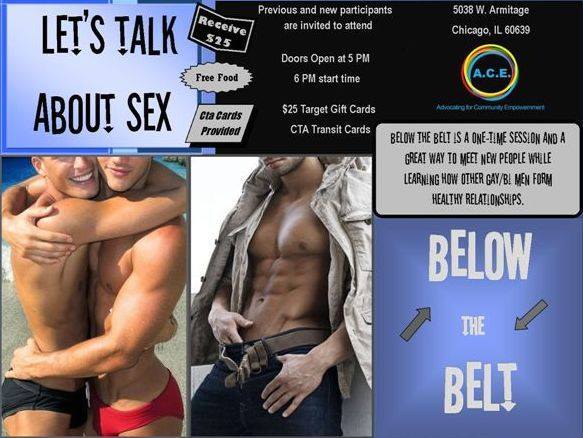
What are M-Groups? M-Groups are peer-led, one-time meetings of 8-10 young adult bisexual and gay men that give participants an opportunity to talk openly about prevention issues. It is the only scripted part of this intervention. The meetings, which last about three hours, are an extremely important part of the Mpowerment Project (MP). To learn and read more about the M-Groups register at mpowerment.org and download Module 9: M-Groups.


1) Achieve a critical mass

“Diffusion of Innovations Theory” accounts for how new behaviors spread throughout a community (See Module 1: Overview). Simply put, it states that if 15-20% of a particular group adopt a new behavior and let their friends know that they are practicing it, the behavior will spread naturally throughout the rest of the community. For example, groups of friends are quick to adopt a new catchy phrase or fashion made popular by an influential person. In much the same way, young gay/bisexual men can spread the norm of safer sex and knowing one's status. Therefore, the goal of the Mpowerment Project is to have at least 15-20% of the young gay/bisexual men in your community attend an M-group.

See Figure 9.1 in the Appendix in Module 9 M-Groups features a guide about how to estimate the number of gay/ bisexual men in your community. Once they do, it is likely that the safer sex message will spread naturally through existing friendship networks within the community.

2) Make sure groups reflect the community’s diversity 

It is important that the composition of men attending the M-groups reflects the composition of your community. (Download Module 2: Community Assessment for more information about how to assess the different groups of young gay/ bisexual men in your community. Module 2 is a free download when you register at mpowerment.org.)


What's the T? (M-Group) via De Colores | Mpowerment Oakland CA

3) Emphasize the social aspect of M-Groups

We promote M-groups as a fun way for young gay/bisexual men to meet other young men; hear how other young men are dealing with issues of importance to them, such as sex, dating, and relationships; and find out more about the Mpowerment Project. All men who are interested in being involved with the Mpowerment Project should be encouraged to attend an M-group as an 'entry' into the Project. It is very important not to describe M-groups as “safer sex workshops.” We have found this is an immediate turn-off for most young men, and particularly for those who would benefit most from attending.

4) Get creative and keep developing new strategies

Since no one method will reach all the men you want to attend M-groups, use many different approaches. You may find that different approaches work at different times, and that recruiting participants is easier during some periods than during others. Keep trying new methods and improving upon ones you’ve already used even when your recruitment efforts are going slowly. Also keep contacting those men who have been contacted numerous times before without success. As the reputation of the Project and its M-groups spreads through the community, these men may become more open to participating. Module 7: Formal Outreach—Social Outreach Events and Outreach Team describes in greater detail some methods of recruiting men at outreach activities to M-groups. (Module 7 is accessible here.)

RELATED:  5 easy tips on conducting a successful Venue Based Outreach


Below the Belt (M-Group) via A.C.E. | Mpowerment Chicago IL

5) Let others catch your enthusiasm

Although recruiting men to M-groups is not always easy, the vast majority of guys tell us they really enjoyed the groups and found them to be a valuable experience. Furthermore, many lasting friendships have been made among men who met at a group. You will be more effective in recruiting guys to M-groups if you believe in the importance and value of the groups, and if you are warm, enthusiastic, sincere—even charming! Most of all, be persistent, but don’t be pushy. You needn’t feel any reluctance at bringing up the topic of M-groups when you have the opportunity.


6) Use a teamwork approach

Since recruitment is a large task and there are so many different recruitment strategies, we have found it helpful for the M-group Coordinator to work with a team of volunteers. The use of volunteers effectively multiplies the efforts of the M-group Coordinator. Volunteers should be highly motivated and taught how to describe the M-groups so that they sound appealing. There are many jobs that volunteers can perform, such as making initial recruitment phone calls, calling to remind men of an upcoming M-group, networking with their friends and acquaintances, inviting men to attend Project-sponsored events, and so forth. Working successfully with a team of volunteers is an acquired skill, and requires careful attention to a number of things, including coordinating volunteer activities, evaluating the success of events, and keeping volunteers motivated. As suggested in Module 5, Core Group and other Volunteers - volunteers always appreciate tokens of appreciation for their efforts and commitment, and respond positively to little things such as thank you notes and snacks.

RELATED: 4 easy steps for involving volunteers: Mpowerment Project best practices. 

Constantly evaluate your recruitment methods. 


The Mu Crew have participants attend the M-Group as part of their weekend RETREAT. | Mpowerment Dayton OH
RELATED: Retreat planning blog with the Mu Crew, Mpowerment Dayton OH

RELATED:  5 important questions for the Mpowerment Project to ask itself. 

Module 9 M-Groups is a free download. 


Borrow and improve on these M-Group publicity campaigns (click to make larger):


A.C.E., Mpowerment Chicago IL

The Q Austin, Mpowerment TX

M Society, Mpowerment Houston TX

GCMC, Mpowerment Columbus OH

Miami Mpowerment Project, FL
Generation L, Mpowerment Chicago IL

The Evolution Project, Mpowerment Atlanta GA
Toledo Mpowerment, OH

RELATED: Mpowerment Project share materials: Find more M-Group promotional examples here.


Monday, September 21, 2015

Gay, Sex, and Black Affirming: The Mpowerment Project

This blog-post discusses how the Mpowerment Project (MP) has been adapted to meet the HIV prevention needs and socio-cultural context of YBMSM’s lives.  To read more download the guide 'United Black Ellument (U-BE) Adaptation of the Mpowerment Project for YBMSM.' It is a free download when you register at mpowerment.org. This document should be used in tandem with the MP implementation manual.


The men of M Society, Mpowerment Houston TX


MP Guiding Principle: Gay, Sex, and Black Affirming

U-BE attempts to enrich and strengthen YBMSM’s pride in being gay/bisexual/same gender loving and nurture their exploration and celebration of their sexuality, focusing not just on condom use but including the variety of sexual activities that are safe. The intervention should also strengthen YBMSM’s pride in being Black and being gay/having same sex attraction. This means supporting Black love, Black gay love and pride in being part of Black gay community. Men who are more out may want to address homophobia, whereas others may feel uncomfortable doing so. 


RELATED: Exercises addressing homophobia

Mpowerment Training, Columbus Ohio

New Guiding Principle: Cultural Competency and Culturally Affirming


The Project Coordinators as well as the organizations running MP need to be culturally competent about African American issues in order to effectively implement the intervention with YBMSM. While cultural competency is an important issue for any MP to be relevant and accepted by a particular population of MSM, the implementation of MPs targeting YBMSM has focused on making the intervention not only gay and sex positive but also culturally relevant for YBMSM. Those projects have integrated themes, issues, and values relevant to African American culture into their activities, such as the importance of the family. Doing so helps YBMSM identify with the project and promotes community building and acceptability of the project.

Cultural competence includes taking into account that there is not one Black community but considerable diversity among African Americans. Thus, making the intervention culturally relevant includes considering diversity among YBMSM, such as socioeconomic backgrounds, education, and ages of the participants, in order to implement and deliver an appropriate intervention and messages that will be appealing to many different men. For example, the way sexually related messages are approached and delivered likely differ for Black teenagers and men in their late twenties. 


Mpowerment Training Newark, New Jersey
Thus, successful implementation of U-BE calls for implementing agencies that are culturally competent regarding YBMSM. While a CBO could already serve the Black community, it is important that the agency understands the needs of YBMSM as well as the rationale for MP and what will be required to implement it. Agency buy-in is essential. If that is not the case, lack of understanding and clarity could ensue when the MP Coordinators are not allowed to follow the MP guiding principles and core elements because they do not coincide with the strategic planning or even the philosophy of the organization. 

Because the project will be run by and for Black men, they are likely to bring a certain level of cultural competency and affirmation from the start. In addition, every opportunity there is to have the project emphasize cultural affirmation should be used. Both the content and the presentation approaches need to be culturally affirming. If the project staff, including supervisor, are not well versed in African American culture, then learning this area is extremely important. 

RELATED: 11 themes to address in implementing Mpowerment for YBMSM

Men who are not open about their sexual activity with other men and who who do not have an identity related to their sexual activities with men may feel completely uncomfortable addressing homophobia; however, it is unclear how many of these men will participate in the project anyway, though hopefully they will be reached through informal outreach. The most out men may want to confront homophobia from their families and society, as well as internally felt, by reading and discussing books such as Keith Boykin’s books, read poetry, write poems, write music and so forth. For men who are not open about their sexual lives with other men, these activities may not appeal at all. Some projects may want to have some discussions about the issues related to disclosing one's sexuality or not, including inviting speakers to talk about their personal experiences. 

The issue of positive sexuality is likely tied to the issues of sexual identity, and self-acceptance as a man who is attracted to and has sex with other men. Projects should strive to increase views that sex can be both pleasurable and safe. But to the extent that men have internalized messages from the church or other parts of society that sexuality is 'dirty' and shameful, and is only acceptable within monogamous heterosexual relationships (and preferably for procreative purposes), this may be a challenge. Men who are more out may be more able to receive and promote messages about sex with men being healthy, pleasurable, and natural, while also being safe. This can be achieved through informal outreach and in the development of promotional materials regarding safer sex. We need to strive to reach all groups of YBMSM with these messages.


The Mpowerment Project at the United States Conference on AIDS 2015

RELATED: 17 African American & Men of Color Mpowerment Projects

RELATED: Center for AIDS Prevention Studies (CAPS) UCSF | Resources for National Black HIV/AIDS Awareness Day


RELATED: HIV among African American Gay and Bisexual Men | Centers for Disease Control and Prevention


RELATED: Why HIV is a crisis for Black gay men and why so little has been done about it

We are here for you. Capacity Building Assistance (CBA) services available
    United Black Ellument Mpowerment Dallas TX:  Website | Facebook | Twitter

    READ MORE about implementation of the Mpowerment Project for young adult Black Gay and Bisexual men: 

    More adaptations are addressed in the rest of the manual, United Black Ellument (U-BE): Adaptation of the Mpowerment Project to Young Black MSM. This manual is a free download when you register at mpowerment.org. Look for the "Adapting Mpowerment" link.


    Wednesday, August 19, 2015

    National Voter Registration Day, Tuesday September 22, 2015

    Hundreds of events are being planned across the country for National Voter Registration Day 2015. This page features a directory of all planned events do that future voters and those interesting in volunteering can find local events near them. Partners: add your events to the National Voter Registration Day directory.
    • Across America, communities are using National Voter Registration Day to celebrate our democracy by exercising our most basic right: the right to vote! Thousands of Americans will register to vote on Tuesday September 22.
    • National Voter Registration Day is the largest one-day effort of the year to register voters. It falls on the fourth (4th) Tuesday of September. This year, National Voter Registration Day is September 22, 2014.


    GENERAL PUBLIC TOOLKIT. This page features resources to spread the word about National Voter Registration Day 2015. Click me.

    #CelebrateNVRD

    Tweet this:
    September 22 is National Voter Registration Day! We’re celebrating! http://goo.gl/e07Li3 via #CelebrateNVRD

    Tweet this:
    Have you moved since Election Day 2014? Make sure you’re registered to vote at your new address! http://goo.gl/e07Li3 via #CelebrateNVRD

    Tweet this:
    Join millions of voters during this year’s midterm elections! Register to vote! http://goo.gl/e07Li3 via #CelebrateNVRD

    Tweet this:
    On Sept. 22, we celebrate democracy across the nation! It’s National Voter Registration Day! http://goo.gl/e07Li3 via #CelebrateNVRD


    ROCK THE VOTE

    Election Information - To get registered or check your registration status, find out when and where to vote on Election day, or how to vote early. Figure out who's on your ballot and more.  Click me.  

    Host your own Rock The Vote Event. Download the event toolkit.
    Voter Registration tools powered by Rock the Vote. The online registration tool provides a simple solution for modern voter registration. 


    Quick Facts via Rock the Vote

    • More than 84 million Millennials will be over 18 in 2016.
    • 12,000 Americans turn 18 every day.
    • The Millennial generation is the largest in our country's history - bigger than even the Baby Boomers.
    • The Millennial generation is also the most diverse - 43% are people of color.
    • 66,000 American Latinos turn 18 every month.
    • 90% of American youth are online, with over 60% connected to the Internet while away from home.
    • 90% of American Latinos under 29 consume information in English.
    • Millennials have the potential to be the largest voting bloc in our country but are voting at a fraction of their size, with an estimated 30 million young people staying home in 2012.
    United Black Ellument | Mpowerment Dallas TX